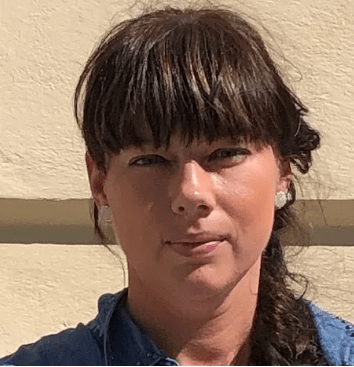
Emma graduated from Dalarna University in 2020 with a teacher’s degree. She began her PhD in August 2020 at Uppsala University. Her supervisors are Esbjörn Larsson, David Sjögren, Iva Lucic and Peter Bernhardsson.
Interviewer: What are your general research interests?
Emma: Well, I mean my PhD project is about Christian education so my general research interest lies in that field. I am interested in democratization, welfare state building, and secularization so that is a very wide research field, but I think you can develop a lot of interesting objects of study within that area.
Interviewer: How did you become interested in Christian education?
Emma: Well, the reason I became interested in that is because during my teachers’ training, I wrote a thesis on how discussions about Christian education were conducted in a teachers’ magazine called Svensk läraretidning in the late 19th century and early 20th century so my dissertation is a kind of development of this thesis that I wrote during my teacher’s training. That’s why I became interested.
Interviewer: And what is the topic of your thesis now?
Emma: Well it focuses on Christian education, democratization, and secularization in Swedish primary school during the 20th century. So in my project, I am trying to problematize the notion held by previous pedagogical and educational research in Sweden that Christianity and Christian education became irrelevant during the process of democratization. Drawing on research conducted by for example Mette Buchardt, I argue that Christian education was not marginalized but transformed in order to be compatible with the new democratic society. I mean: we can talk about deconfessionalization and stuff like that, but Christianity remained very important in the upbringing of children in the school I would say, but in a different way.
Interviewer: That is very interesting. Did you change your topic from when you first started? Was there some sort of development?
Emma: I mean, the foundation I would say is the same I wanted to problematize and create a greater understanding of how the school subject Christianity developed during the 20th century. But of course, the project has evolved and become more specific and clear concerning theory, how to combine different sources with each other and stuff like that.
Interviewer: Okey and then the last question is: What other stuff do you do aside from the research for the graduate school?
Emma: Well, at the moment I am contributing to an anthology written together with the other PhD candidates in the graduate school, and besides that, I have written some other articles and reviews and I have also participated in some conferences. For example ISCHE-42. I am part of an interdisciplinary network called Historical Studies of National Christianities. The network consists of researchers in church history, history and history of education. So, during ISCHE conference last year I presented our network and what we do, which is closely linked to my own PhD-project. I have also been at the Nordic educational history conference in Aalborg in May this year and next week I will go to Finland and I will participate in the 6th Finnish conference on historical research. I am also organizing a symposium called national Christianity in the Nordic regions past and present together with three other PhD candidates in church history. So that symposium will take place in May next year. So that will be a lot of work!
Interview by Michal Mehrens , MA, Rijksuniversiteit Groningen.
 appliedhistoryofeducation.school.blog