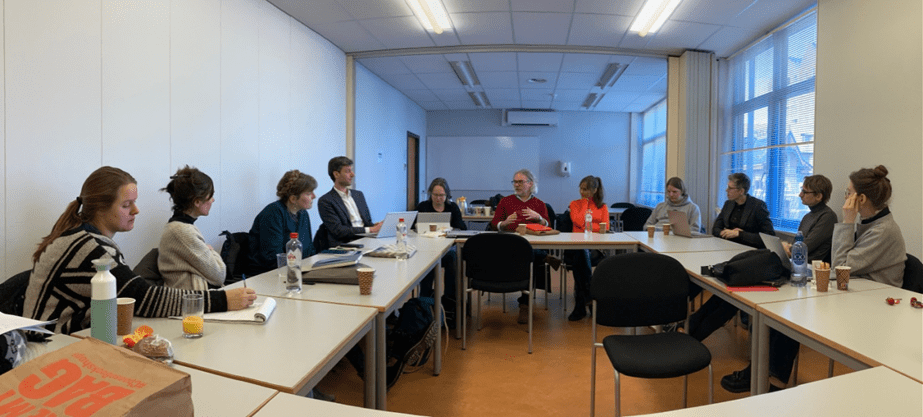
On the 6th and 7th of March, 2023, a Workshop about Historical Writing for PhD students was held at the University of Groningen. At this workshop, PhD students and a number of experts in the field of academic and historical writing were invited to share their knowledge on the matter. The event included presentations on the art of academic writing, on the components needed to make academic writing more appealing, and on the different types of academic writing. Furthermore, four peer review sessions were carried out as well as constructive open discussions among the participants, which were crucial for the success of the Workshop. The workshop was organized by two PhD students, Rebecka Göransdotter (Uppsala University) and Chelsea Rodriguez (University of Groningen). I spoke to one of the organizers, Chelsea Rodriguez, with the purpose to learn more about the event and her role in it.
Interviewer: A few days ago, the workshop you have organized on Historical writing was held. Could you tell me more about it? What was its content? How many people participated?
Chelsea: It was a PhD workshop on Historical writing. It involved seven PhD students who are all in crucial moments of their PhD studies, as they are starting to write articles for publication and major chapters for their dissertations. All of us are involved in the subject of the history of education, so we are trying to make our writing understandable and informative with strong arguments. We saw this workshop as an opportunity to exchange ideas between us instead of only hearing from our supervisor(s). All of us shared an article who have been working on, and a lot of time was given to discuss and peer review these articles in small groups. We also had some senior academics who came in to talk us about approaching historical writing and historical writing strategies, how to integrate literacy devices into academic writing and the different ways you could do it, as well as how to write not only academic articles and book chapters but also how to write acaedmic blog posters or tweets. We talked about the broad range of ways we could approach writing and tried to think critically about how improve our own writing, and also give feedback to other people’s writing.
Interviewer: Which were the initial objectives you wanted to achieve through the Workshop?
Chelsea: Essentially, the main aim was to provide space for PhD students in the History of Education to receive feedback on their work from outside readers, but also to work on a collaborative environment and learn new and more helpful writing strategies. We have a really strong peer group and a pretty tight-knit PhD community through the international graduate school, which hosted this workshop. It was an opportunity not only to build ourselves individually but also strengthen our research inside the learning community, which I think was really important.
Interviewer: For how long have you been organizing the Workshop, and which were the difficulties you faced?
Chelsea: We got the idea three-four months ago that we wanted to do it. But I think the actual planning it was about two months ago, we started putting together how we wanted the workshop look and who we wanted to invite in the beginning of the year. We had not just speakers from the University of Groningen but also two senior academics coming from Sweden. That takes time: figuring out who you want to invite to get them here, figuring out what they should talk about and for what they can talk about, arranging their travels, and all those things. So, we planning the two day workshop took two. I had a co-organizer, Rebecka Göransdotter from University of Uppsala in Sweden. Both of us had this idea of what we wanted from the workshop, so we collaborated and shared tasks. I was the local organizer and she was the more international one. Coordinating everyone’s travels, emailing everyone, and setting the tasks for the peer review. It was truly a team effort.
Interviewer: Which were the reasons you chose this specific topic for the Workshop? Was there a broad interest/demand from the participants or was based on your personal academic interests?
Chelsea: I think it was based on a need that we were seeing amongst our peers. You know, as a PhD student you are in a constant phase of submitting your work, getting feedback, revising it and sending it again to supervisors or to research groups. But a lot of times you either get feedback from the same people all the time, like from your supervisors, or when you get to share your work outside researcher’s circle it’s given less time for feedback, or it’s through the blind-peer review process by submitting to a journal. So, we found it interesting and helpful to be able to share and revise our work with each other.
Interviewer: Now, after the completing of the Workshop, which are your feelings? Do you think it achieved its initial goals?
Chelsea: Yes! I absolutely do. I think that working in small reading groups was really meaningful. All of us we were feeling really inspired and really motivated. We were able to share our work in a really safe environment for exchange. I think it made us all certainly think about our writing more clearly and it made us better writers and better PhD students. There was another activity, which I think was really important to the end as well. We ended our workshop with a session on “imposter syndrome”, which was led by the PhD psychologist at the University of Groningen, Karen Huizing. We found that really helpful because it kind of helped us to understand our ways of working as researchers better and understanding each other, as well. It was really insightful to see how other PhD students see themselves and the ways they work. In addition to learning how to write better and more clearly, it was also nice to have this opportunity to take a step beyond literal writing to break down the mental part of writing, as well. I certainly feel that the workshop achieved its aim, everyone left felling motivated and inspired.
Interview by Dimitra Leontiadou, MA student, University of Groningen.
 appliedhistoryofeducation.school.blog