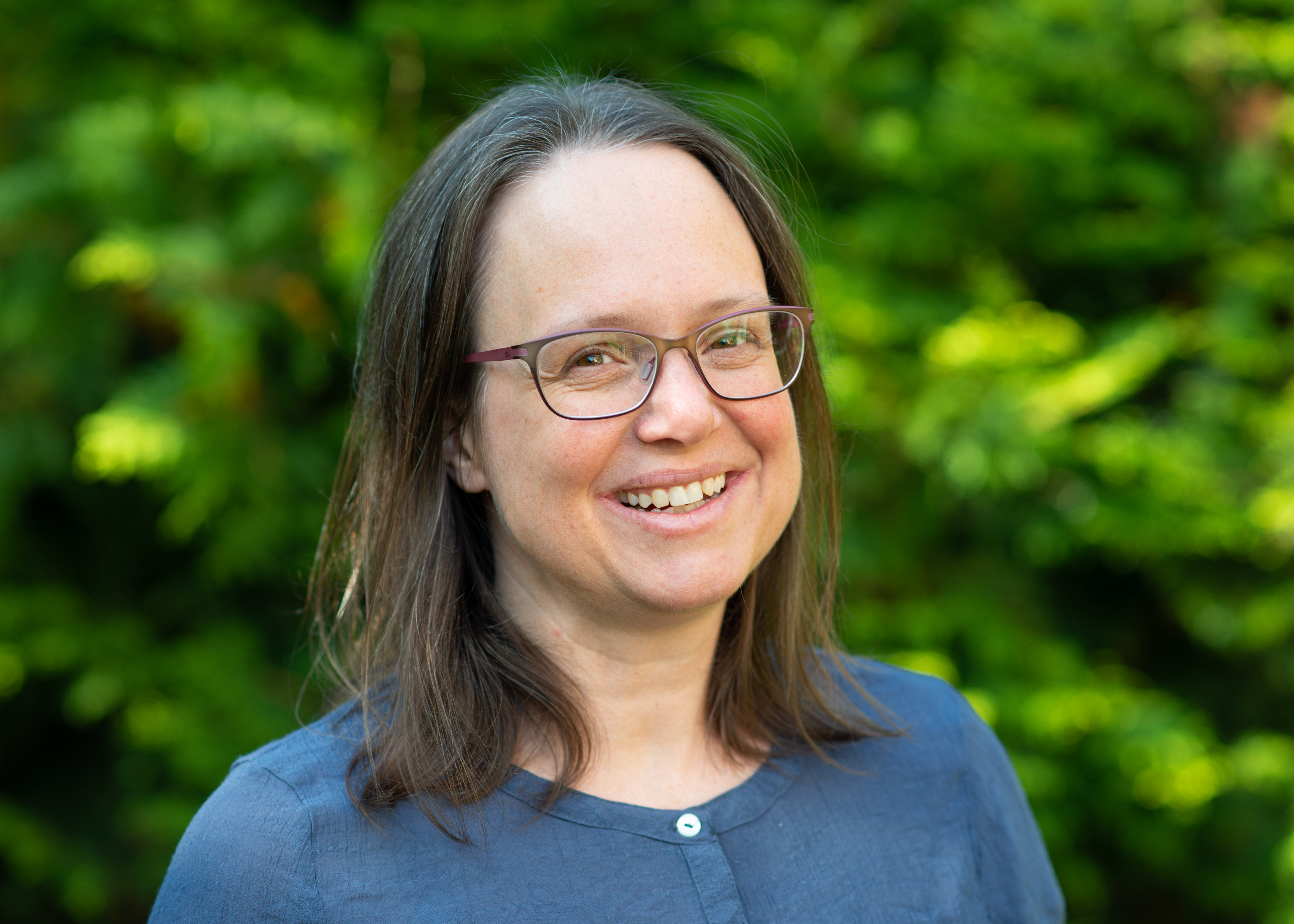
Ann Helene Mork is a PhD student from USN (University of Southeastern of Norway), whom I interviewed regarding her PhD thesis and her experiences of the Summer School on Historical Analysis, which was organized a few weeks ago in Groningen, 5-9 June, 2023, by the Faculty of Behavioural and Social Sciences. Mork is one of the PhD students associated with the graduate school in applied history of education.
Interviewer: Good morning! Would you like to tell us which exactly is your PhD thesis topic?
Ann: Yes, I am working with conceptions of history Education in Norwegian and Swedish upper secondary schools between 1920 and 1960. I am looking at conceptions of history education in the gymnasium, which are those theoretically upper secondary schools that qualify for university studies in this period (1920-1960). I am especially interested in the meeting between reformed pedagogy or ideas of reformed pedagogy of this period and history education, in a school form that also has quite close ties to the university and the academic sphere. I have been looking curriculum and articles written by teachers and educational resources and focused on two specific schools.
Interviewer: For how long are you working on this project?
Ann: Well, I started in October 2020. Almost three years and I am almost approaching the end of that. So, I have a bit under a year left to work on it.
Interviewer: Has your topic changed since you begun?
Ann: Definitely because when I applied for the PhD research fellowship it was with a project that was far more contemporary. I was going to look at how teachers choose educational resources in history. But since I have an MA in history, and my supervisors are historians, we decided to include one article with an historical perspective in my thesis. But then the covid-pandemic hit. So going out to schools and interviewing and observing was not possible. For me, it was also very natural to focus more on the historical part. So, we redefined my PhD into a historical project.
Interviewer: Which are the difficulties you have faced until now working on this project?
Ann: I think the pandemic had its challenges because it took a year before I could go to Sweden to look at source material, for instance. So, delays because of that and also because of redefining the project. But I am very happy with the historical direction of my PhD thesis, and also participating in the graduate school was wonderful. We did everything online in the beginning, but that nevertheless meant I had some people to be in touch with and I got to know them. So, I think the graduate school really helped a lot.
Interviewer: Great! And now let’s go on another subject. The summer school on historical analysis was conducted few weeks ago in Groningen, was your first time participating in that summer school?
Ann: Yes, it was. I was supposed to participate last year as well but for personal reasons I did not.
Interviewer: What did the summer school include?
Ann: The focus was on academic writing. So, we had both lectures, very interesting lectures on a number of topics and then we had two longer workshops. In the first workshop, we analyzed published articles and kind of compared it to the things we have been talking about in the lectures and in the discussions. We were kind of assessing their way of writing and that was very interesting. We had been given some articles before that, we read and we discussed them. The second workshop was about our own projects. We all submitted a text and it was really good because we could submit what we were working with, whether that was a proposal or it was an article. And then we had a good time to discuss each text in our groups, it was very rewarding. Also, to have people who do not know our topic and maybe not the context, like the national context either, read it. Also, reading other’s people work was very interesting. You get so many new ideas and thoughts when you do that.
Interviewer: Would you say you obtained the knowledge and skills you expected from the summer school?
Ann: Yes, I think so and more things as well. So, there were some new ideas. I think it’s quite inspirational to be with other people in the same situation and discuss both challenges and the good things. I at least felt really inspired to keep writing afterwards. So, it was an encouragement there and the lecturers were really good as well. I mean it was a good balance.
Interviewer: One last question, if it was to suggest any changes for the next year’s summer school, which they will be?
Ann: I don’t really have any because I think it worked really well. So of course it will depend on whether everyone is new, if they are thinking that this going to be a brand new topic. But for me as a newcomer it was really good, so it depends how they think about that. Generally, it worked well and it was applicable to everyone, even if you are in the beginning or in the end of your writing process it helped anyway.
Interview by Dimitra Leontiadou, MA student, University of Groningen
 appliedhistoryofeducation.school.blog